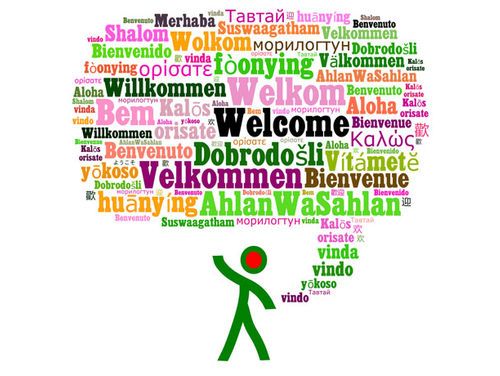
There’s no doubt that we’re living in an increasingly multilingual society. It actually takes 20 languages to communicate with 80% of the world’s online population. However, according to a report from Common Sense Advisory (CSA), content in English has dominated the web “while companies have catered to Anglophone markets and the enormous spending they generate”. Despite this, English isn’t in fact the only prime language of ecommerce.
When it comes to business, people like being marketed to in their native language and, more often than not, that’s not English. We’ve commissioned a year-long study into the behaviour of the millennial generation (aged 18-36) looking at how their behaviour is forcing businesses to adapt their digital marketing approaches. A key focus for us within this has been the impact language has on marketing techniques. We surveyed 1,800 millennials and found that 32% of the millennial generation in English-speaking markets actually prefer a language other than English. What’s more, 46% are more likely to make a purchase if information is presented in their preferred language. These findings are supported by the CSA’s report which highlighted that 75% of online shoppers are more likely to buy products from websites in their language and 74% are more likely to purchase from the same brand again, if the after-sales care is in their mother tongue.
More so than any generation previously, it’s the millennials who are causing the biggest headache for marketers. They’re far more demanding than their predecessors and expect content to be delivered to them across their preferred device, channel and more importantly, in their preferred language. Figures like those above demonstrate just how language needs to be an integral part of any global digital marketing and customer experience strategy. If you don’t have this factored in then you risk alienating a significant proportion of your target audience, reducing the likelihood of driving brand advocacy and sales.
But how can marketers easily deliver high-quality multilingual content to their customers? It often seems particularly difficult to accomplish this in such a fast-moving, multinational market where millennials interact online and through social media. Digital marketers need to implement solutions that will enable them to translate potentially high volumes of high quality content into multiple languages, and deliver this at speed.
A great example of a business committed to offering its customers this service is B2B travel provider GTA, part of the Kuoni Group. GTA is growing fast, with already thousands of customers in 185 countries worldwide and processes over 21,000 bookings per day in more than 25 languages online. The company has recognised the importance of localising its content – tens of thousands of hotel and ground travel descriptions – to its global customer base, particularly as it continues to grow exponentially. It aims to deliver a seamless and personalised customer experience by addressing cultural differences.
GTA looks closely into language nuances. For example, in the South American market, Brazilian Portuguese is totally different from the Portuguese that’s spoken in mainland Portugal. It’s worth noting that businesses should make different languages available to customers within the same country. In Belgium and Switzerland there are at least three languages spoken in each. It’s about taking into consideration your target audience’s cultural makeup. The company has removed this issue to provide a better service to its customers by translating and using colloquialisms to target customers to ultimately make its customers happier. GTA believes cultural subtlety through translation will bring about repeat business as customers will feel more cared for and more ‘at home’.
Thanks to integrated translation technology that is more intuitive to customers’ language preferences, GTA can market itself to a much wider audience and know that its content is resonating with its global audience – no matter where they are or what language they want to communicate in. This shows that a single solution which offers a combination of human and automated translation options to provide local language interactions with customers, regardless of geographic region, is key.
What can speed up this translation process even further is turning to the cloud. With a cloud-based approach, businesses have direct access, on-demand, to language capabilities from within their customer experience ecosystem. Language processes are combined into one platform so they are easily accessible to everyone and translations can be initiated from existing business systems. Cloud solutions are particularly beneficial in implementing a language strategy as they help businesses to simplify and speed up localisation processes and make translation technology and services easily accessible to businesses, regardless of their size or location.
A language and cultural content strategy needs to be a fundamental part of any business’s digital marketing strategy. Language translation solutions provide a key way for businesses to do this efficiently and accurately to ensure that they are fully engaging with their customers from across the globe, with culturally relevant messages. By ensuring content is personalised, businesses can attain a competitive edge in a condensed market and, with the added benefits of cloud technology, they are able to quickly adapt to business growth and changing customer needs.
Paige O’Neill Chief Marketing Officer of SDL and has almost 20 years of experience in senior marketing roles