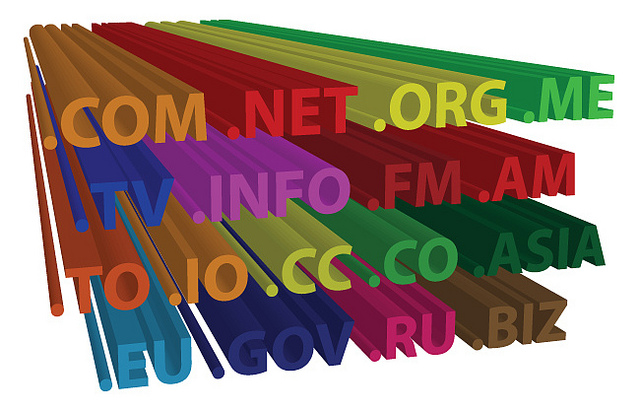
The internet as we know it is about to undergo a massive change. So far, the vast landscape of the internet has been organized according to web addresses that follow generic categories like .com, .org or .net. This upcoming year, ICANN, the international body that governs internet naming, will be removing restrictions on domain names and applicants will be able to bid for an unlimited number of possible names. This means that individuals and corporations will be faced with the challenge of marking their territory online. This will be one of the most dramatic changes to the internet that we have yet seen.
Even though these changes are imminent, many companies do not seem to be seriously preparing for them. We at Roundarch Isobar have been thinking through these developments and discussing them with clients for several years. As a digital agency, we believe the changes in top-level domains will have a broad effect that will influence users’ experience with a brand. It is imperative that organizations develop a strategy for staking their claim on the internet because once the new names take effect, they will be permanent and may have wide reaching consequences. A “wait and see” strategy is no strategy at all.
Top-level domain names have the potential to be hugely beneficial to companies, who can deploy them to develop their brand more fully. However, there are also going to be great risks and costs associated with operating a domain name registry. To prepare for these upcoming developments, it is important to develop a strategy that maximizes on the opportunities and mitigates against the risks.
Here are three ways that companies can begin to prepare for the changes brought about by the new top-level domains.
Define Your Company Identity
Under the new scheme, companies can apply for either a generic top-level domain that represents an industry, such as .news, .shop or .pr, or specific branded top-level domains, such as .nyt, .vw or .yale.
If you are considering adopting an industry specific top-level domain, the first step is to think about what industry category you want to be associated with. For companies that offer services in multiple industries, this discussion may be complex and involved. You may want to invest in several top-level domains to distinguish various aspects of your business. If you are a florist with a general store and a specialized wedding store, you could develop an online presence that includes both CharlotteFlower.shop and CharlotteFlower.weddings. This will allow you to customize content and provide for intuitive, streamlined navigation.
Applying for a branded top-level domain also has important advantages for companies. This will be a valuable opportunity for you to enhance user experience on your website. It will also help you to reinforce legitimacy and industry leadership for your brand, as well as have the effect of making your customers feel more secure on your website, since it will be clear from the outset that your company owns and manages the domain.
Assess the Cost of Acting
If you are thinking about applying for a branded top-level domain, you need to think carefully about whether it is worth the financial investment. The application fee for a top-level domain is $185,000 and the minimum ICANN annual fee is $25,000. It is also important that you take into account the possibility that other entities may contest your top-level domain. There will be cost associated with responding to a challenge and there are also legal fees to consider. Consultants estimate that the overall cost for applying for a branded top-level domain will come to about $400,000 with a yearly cost of $150,000 to maintain it.
Assess the Cost of Not Acting
This is a large investment of time and money, but this is not simply a question of improving your brand image: it is also a defensive strategy. Applications for branded top-level domains will occur in rounds. If a domain name is awarded in the first round, it will not be available in the next rounds. Companies with generic or common names will risk losing their claim to a particular top-level domain name if they do not act quickly. In fact, a very large percentage of corporate domain portfolios are made up of defensive domain registrations. We predict that the number of defensive registrations will only increase as companies begin responding to the upcoming changes.
It is not too late to begin seriously developing your top-level domain strategy. This will involve important discussions about how you define your brand identity and how you will assign your marketing and IT budgets in the upcoming months. These changes are already upon us. It is imperative that you prepare for them, so that you are able to maintain your competitive advantage.
By Dave Meeker, Director of Emerging Technologies, Roundarch Isobar